When and How Much to Trim Overgrown Shrubs
Learn when to trim overgrown shrubs, how much to cut at once, and how to avoid “shocking” your plants so your landscape stays healthy and attractive.
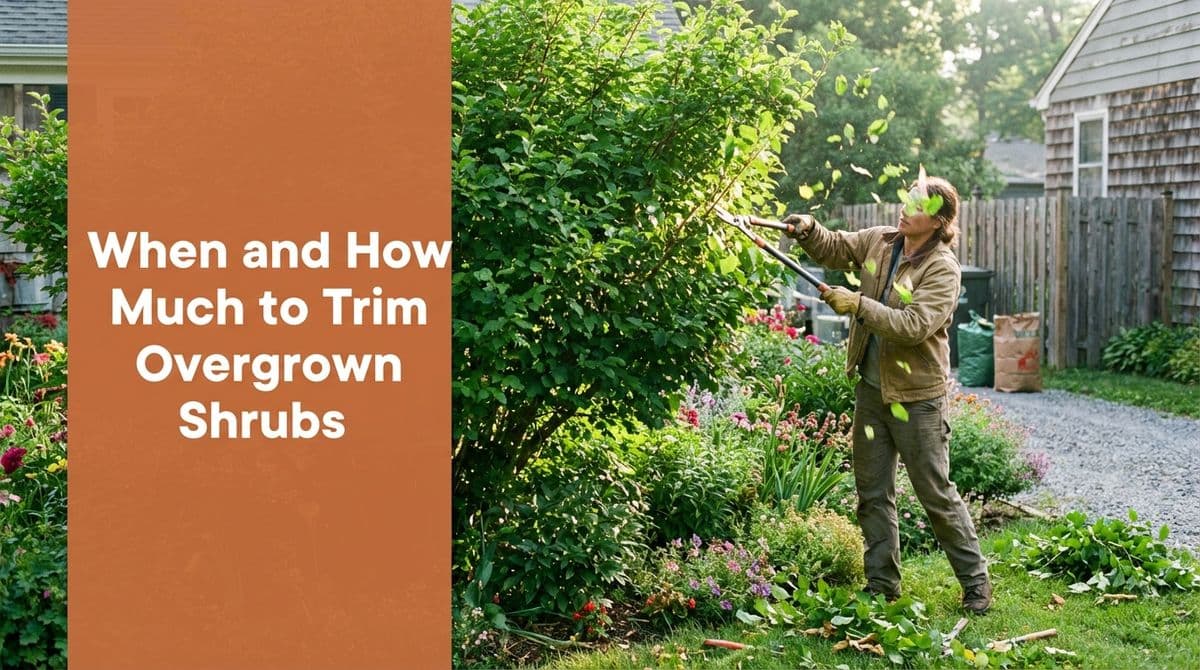
A homeowner worried about “shocking” their shrubs
We recently got a call from a customer – let’s call him Mark – who had a great question about his overgrown shrubs. Last season, we’d trimmed two big bushes by his garage that had grown all the way up to the gutters. We took them down partway, but we intentionally didn’t cut them to the final height all at once.
On the phone, Mark said, “You didn’t want to do them that much because you thought it’d be too big of a shock. Should we finish that off this spring, or wait until fall?” That concern – avoiding “shocking” a shrub – is exactly why timing and how much you cut really matter.
Let’s walk through when to trim overgrown shrubs, how far you can safely go, and how to keep your landscape healthy in the process.
Why you shouldn’t cut an overgrown shrub all at once
When we first trimmed Mark’s shrubs, we stopped short of the final size he wanted. The reason is simple: every cut is a wound, and removing too much at once can stress or even kill a plant.
Most shrubs store energy in their branches and leaves. If you suddenly remove 50–70% of that growth, the plant has very little “food factory” left to recover. That’s what people mean when they talk about “shocking” a shrub – the plant goes into survival mode and may thin out, die back, or fail to leaf out properly.
Instead, we usually recommend gradual reduction, especially for older, established shrubs that have been overgrown for years.
How much can you safely trim at one time?
As a general rule for most common landscape shrubs around homes:
- Routine shaping: Remove up to about 10–20% of the plant each year.
- Size reduction: Aim for no more than 25–30% of the live growth in a single trimming.
- Severely overgrown shrubs: Plan on two or three seasons of gradual cutbacks instead of one big chop.
With Mark’s tall shrubs against the house, we first brought them down to a safer, slightly lower height, then planned to come back the following spring to reduce them further. That way, they have time to push out new shoots between trims and rebuild their energy reserves.
Best time of year to trim overgrown shrubs
On our call, we recommended Mark wait “about a month and a half” and then tackle the heavier trimming in mid to late spring. That timing gave the shrubs a chance to start putting on new shoots before we asked them to recover from more pruning.
For most homeowners, these guidelines work well:
- Early spring (before leaf-out): Good for many non-flowering or summer-flowering shrubs; you can see the structure clearly.
- Mid–late spring: Ideal for finishing a reduction on shrubs we partially cut the previous year, like we did for Mark.
- After spring bloom: For spring-flowering shrubs (like lilacs and forsythia), wait until they’re done blooming so you don’t cut off next year’s flowers.
- Late summer–fall: Avoid heavy pruning; new growth may not harden off before winter, leading to damage.
If you’re ever unsure what kind of shrub you have, take a few clear photos and ask a pro to help you identify it before you prune heavily.
A simple step-by-step for taming overgrown shrubs
Here’s the basic approach we follow on properties like Mark’s when shrubs have gotten taller than windows or gutters:
- Set a realistic target height. Decide where you ultimately want the top of the shrub: below the window sill, below the gutter, etc.
- Plan for phases. If you need to remove more than about a third of the plant, split the job into two or three years.
- Start with dead and crossing branches. Remove anything dead, damaged, or rubbing first. This alone often improves the look and health.
- Reduce height and width gradually. Take the top down partway, then gently narrow the sides so the plant still has a natural shape (slightly wider at the base).
- Let the plant respond. Give it a full growing season to push new growth. Then revisit and take it down a bit more the following year.
That’s exactly the plan we laid out with Mark: we did the first reduction last season, then scheduled a follow-up trim in late spring to bring those shrubs closer to their final size.
Choosing the right tools and staying safe
The right tools make trimming easier on both you and the plant, and using them safely is just as important.
- Use sharp, clean blades. Dull tools crush stems and spread disease; disinfect blades between shrubs.
- Match the tool to the job. Hand pruners for small stems, loppers for thicker branches, and hedging shears for light shaping only.
- Be ladder-smart. If you need to reach near gutters or higher, work with a stable ladder and a helper, or call a pro.
- Wear protection. Gloves, eye protection, and long sleeves help with thorns, sap, and flying debris.
When it’s time to call in help
Some trimming is absolutely DIY-friendly. But there are a few situations where, in our experience, it’s worth bringing in a crew:
- The shrubs are close to your house, gutters, or power lines.
- You’re not sure what type of shrub you’re dealing with or when it blooms.
- The plants are old, very overgrown, or already stressed and thinning.
- You’d like to reduce height significantly but don’t want to risk losing the plants.
With Mark, our main goals were to protect the shrubs from shock, keep them clear of the house, and make sure they looked intentional instead of hacked back. With a little planning on timing and how much to cut, you can do the same in your own yard – and enjoy a healthier, better-shaped landscape for years to come.